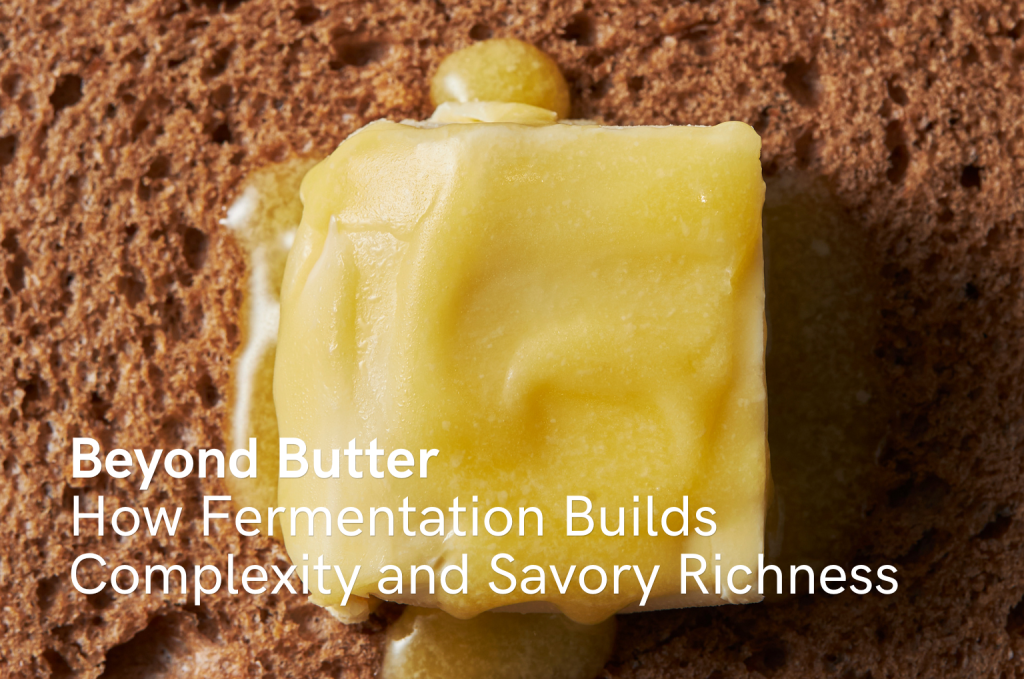
The perception of butteriness is far more complex than simply its fat content. A truly distinctive butter profile is influenced not only by its fat content, but also by how fermentation transforms the fat matrix and creates additional flavor compounds.
During the fermentation of cultured butter, selected microorganisms metabolize components in the dairy matrix and generate various flavor-active compounds, including fatty acids. These fermentation-derived fatty acids contribute to the characteristic aroma and taste associated with cultured dairy products. Rather than creating a single, dominant “butter” note, they help build multiple layers of sensory perception.
Think of conventional butter character as a relatively straightforward sensory signal: creamy, fatty, and buttery. Fermented butter can take this profile further by introducing subtle acidic, savory, creamy, and aromatic dimensions. These additional notes interact with the natural butter flavor, creating a more rounded and sophisticated sensory experience.
This complexity is particularly important because flavor richness is not necessarily determined by intensity alone. A product can have a strong butter flavor but still taste flat if the profile lacks depth. Fermentation-derived fatty acids help provide that depth by contributing different sensory dimensions that unfold across the palate.
From Fatty Acids to Complex Butter Richness
The relationship can be understood as a simple flavor-building process:
Fermentation → Fatty acid formation → More complex flavor profile → Deeper butter perception → Complex butter richness
Fermentation creates the foundation. The resulting fatty acids and other fermentation-derived compounds then contribute to the distinctive cultured character. When these compounds work together with butterfat, the sensory perception becomes more layered, producing a richer and more savory butter experience.
This is especially valuable in food applications where butter is expected to contribute more than just creaminess. A more complex butter profile can help create greater sensory depth and a more distinctive eating experience.
Why Fermentation Matters for Butter Flavor
From an R&D perspective, fermentation becomes a flavor-development tool rather than simply a processing step. By controlling the fermentation process and the resulting flavor compounds, manufacturers can influence how butter character is perceived in the final application.
This distinction matters for product developers looking to create premium sensory experiences. A flat butter profile may deliver recognizable butter notes, but a well-developed fermented character can deliver something more: buttery richness with complexity, depth, and sophistication.
For ingredient solutions such as BUERMO, this concept opens an opportunity to translate fermented butter character into different food systems. The objective is not merely to replicate the taste of butter, but to help formulate products with a more complete and rounded sensory profile.
Ultimately, the connection is straightforward: fermentation-derived fatty acids are one of the key building blocks behind the complexity of fermented butter. That complexity is what can elevate simple butteriness into a deeper and richer butter experience.